
NMEA 0183
serial, 4,800 to 38,400 baud
Talkers from GPS, gyro, echo sounder, wind and AIS, decoded and checksum-verified.
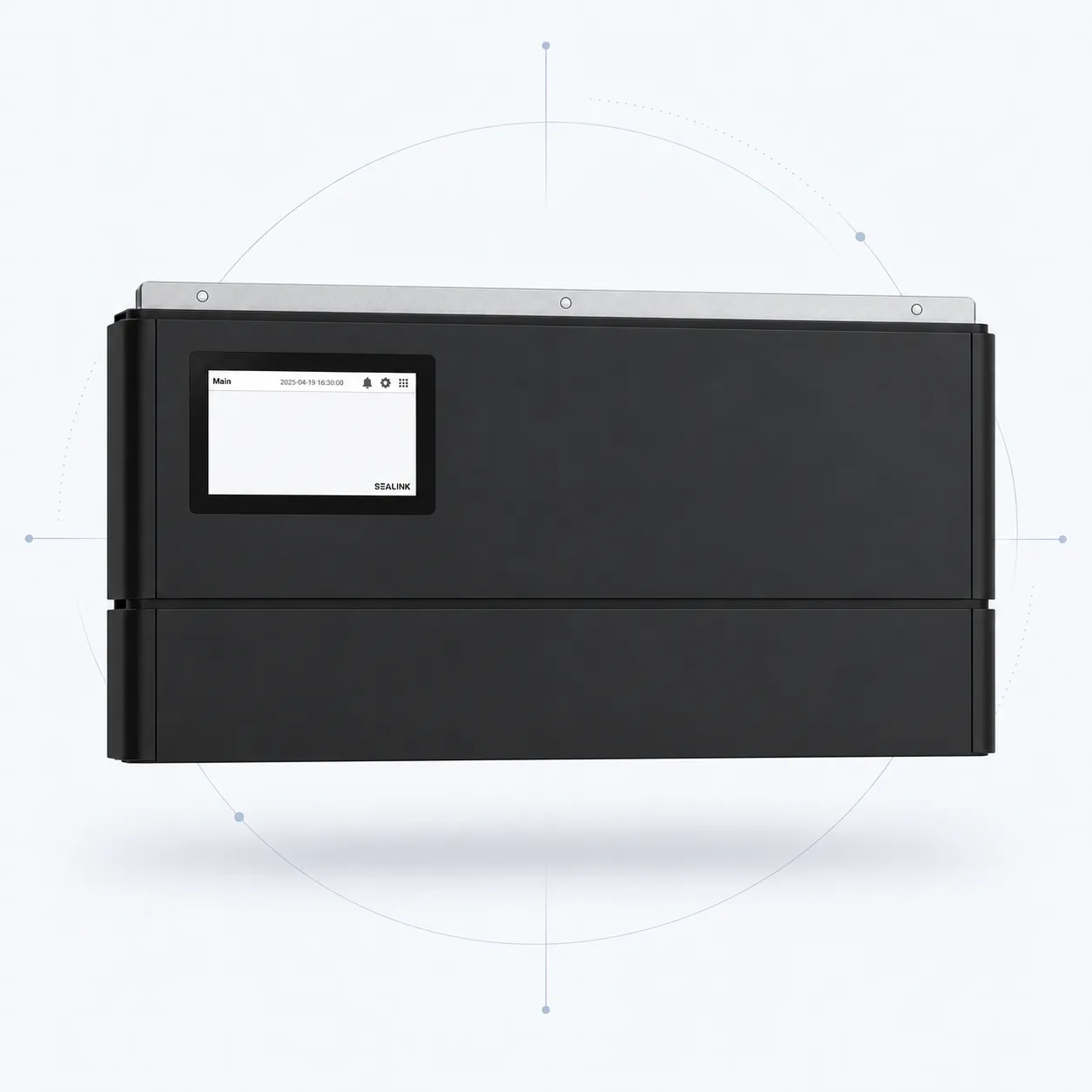
SEAVAULT records every onboard data channel into one tamper-evident, time-synchronised record, and runs AI on it. Onboard data, turned into decisions.
+ 17 more channels, all healthy
+0.02 vs previous 24 h
37°11.7′N 026°42.0′ESOG 14.2 kn, COG 108°
12 vessels, last 30 days, sample data
Data completeness
99.97 %
+0.04 pts vs previous 30 days
Anomalies caught early
1,284
+18% vs previous 30 days
Mean time to detect
4.2 min
-38% vs previous 30 days
Unplanned downtime avoided
312 h
+41 h vs previous 30 days
Every input lands on the same clock and in the same sealed record. The AI modules read from that record, so a vibration alert, a camera clip and an engine alarm always line up to the second.
tamper-evident, time-synchronised
SHA-256 hash chainPlug into the buses and sensors already on the vessel. SEAVAULT reads them in parallel, stamps each sample against GNSS time and writes it to the record without touching the source system.
serial, 4,800 to 38,400 baud
Talkers from GPS, gyro, echo sounder, wind and AIS, decoded and checksum-verified.
CAN bus, 250 kbit/s
| PGN | Parameter group | Rate |
|---|---|---|
| 129029 | GNSS position data | 1 Hz |
| 127250 | Vessel heading | 10 Hz |
| 127488 | Engine rapid update | 10 Hz |
| 130306 | Wind data | 10 Hz |
| 128267 | Water depth | 1 Hz |
Devices by PGN, with instance and source address kept for every frame.
RTU and TCP
| Register | Tag | Value |
|---|---|---|
| 40001 | ME1_speed | 94.2 rpm |
| 40007 | ME1_exh_T4 | 412 °C |
| 30012 | FO_flow | 183.6 l/h |
| 40023 | DG1_load | 61 % |
| poll 100 ms, 0 timeouts | ||
Engine, generator and tank controllers polled on your own register map.
4-20 mA and 0-10 V loops
Temperature, pressure and level sampled at 100 Hz with 16-bit resolution.
dry contacts, 24 V
Contacts and alarm relays recorded as state changes, with the cause on the same timeline.
UDP, TCP, RS-232/422/485
Radar, ECDIS, autopilot and conning feeds kept in their native format next to the decoded values.
Every IP camera joins the same clock. On-device AI tags objects and activity, and each detection lands on the voyage timeline as an event.
SEAVAULT learns each machine's normal from its own record, adjusted for load and season. When a channel drifts you get the anomaly, the evidence and a health score, not another threshold alarm.
+11.6 °Cvs learned baseline
Deviation held above the load-adjusted baseline by 3.1σ for 29 hours. Neighbouring cylinders are normal.
+3.8 dBat 2× rpm
The 2× rpm order is rising while overall level stays inside limits, an early misalignment signature.
+6.2 °Cvs peer joints
Joint 4 warms above its five peers only when load passes 70%. Check torque at the next stop.
Scrub a voyage and every channel snaps to the same moment: position, machinery, alarms and cameras. Investigate an incident, brief a crew or settle a claim from one source of truth.
08:40, ME2 cyl 4 exhaust +9.4 °C vs baseline
Trend projection turns today's health score into a time-to-service for each component, with its confidence range, so work lands in the right port call and not after the failure.
radial vibration, RMS, daily mean
| Date | Observed, mm/s | Projected, mm/s | Projection range, mm/s |
|---|---|---|---|
| 08 Jul | 2.54 | ||
| 16 Jul | 2.57 | ||
| 24 Jul | 2.71 | ||
| 01 Aug | 2.96 | ||
| 09 Aug | 3.11 | ||
| 17 Aug | 3.30 | ||
| 25 Aug | 3.51 | ||
| 02 Sep | 3.76 | ||
| 10 Sep | 3.98 | ||
| 18 Sep | 4.36 | ||
| 26 Sep | 4.61 | ||
| 04 Oct | 5.10 | ||
| 12 Oct | 5.40 | 5.27 to 5.54 | |
| 20 Oct | 5.80 | 5.58 to 6.03 | |
| 28 Oct | 6.23 | 5.90 to 6.55 | |
| 05 Nov | 6.68 | 6.26 to 7.10 |
Recommended: service the turbocharger at the Limassol call on 20 Oct. The projection reaches the service threshold on 24 Oct, and as early as 20 Oct.
reaches service threshold in 34 d
reaches service threshold in 37 d
reaches service threshold in 67 d
Open standards in, open formats out. Nothing about the vessel's existing systems has to change.
Book a walkthrough on your own vessel's channel list. We will map the inputs, show the record and replay a real voyage with you.